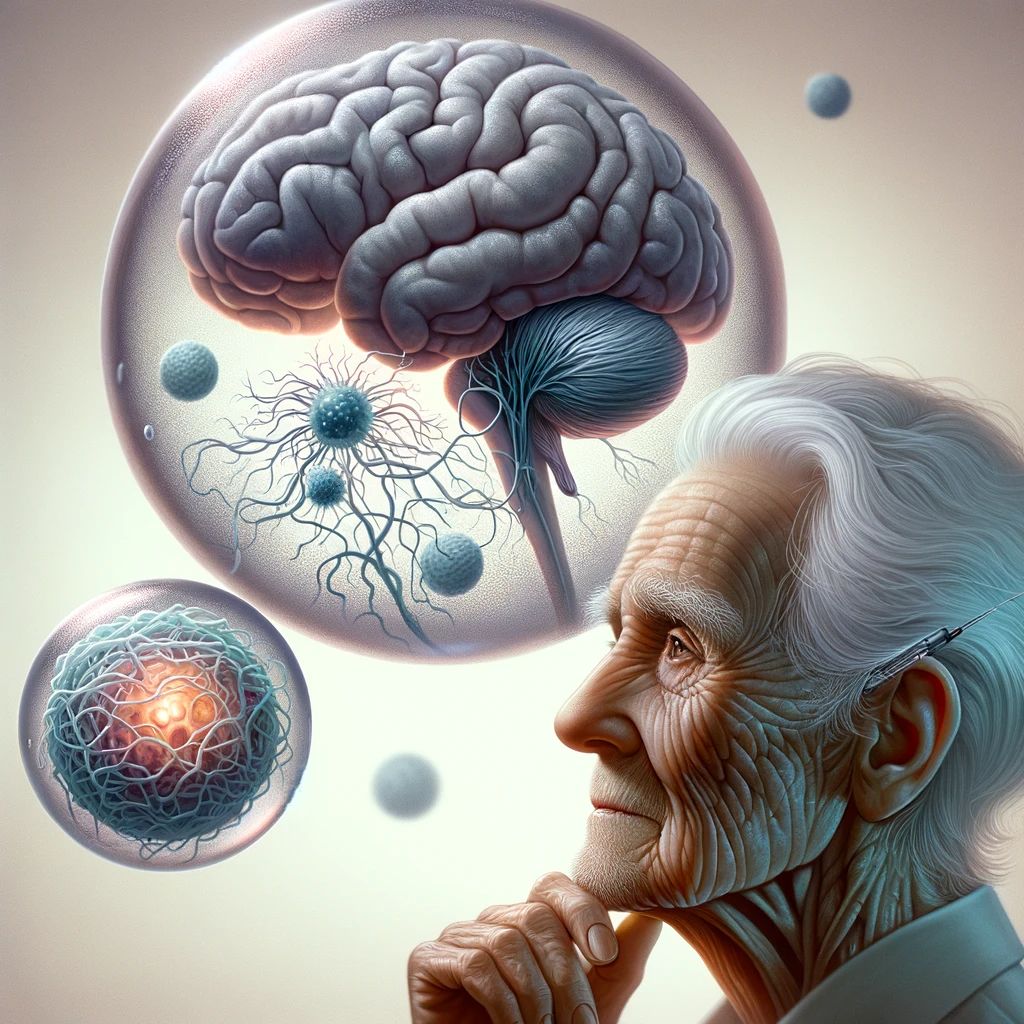
Introduction: A New Era in Neurodegenerative Disease Management
Alzheimer’s disease, a formidable adversary in the realm of neurodegenerative disorders, challenges the lives of millions globally, weaving a complex tapestry of cognitive decline, memory erosion, and emotional turbulence. Current therapies, while providing symptomatic relief, fall short of addressing the disease’s progression and offer little hope for recovery. Emerging research into umbilical mesenchymal stem cells (UMSCs) signals a paradigm shift, potentially changing the narrative from managing symptoms to reversing the course of this devastating disease.
Unpacking Alzheimer’s Disease: Beyond the Symptoms to the Cellular Level
Alzheimer’s pathology is primarily marked by two types of protein accumulations: amyloid-beta plaques outside neurons and tau protein tangles inside neurons. These proteins disrupt critical neuron-to-neuron connections, impairing neurotransmission and leading to cell death. The disease is further exacerbated by a chronic inflammatory response, which not only contributes to neuronal deterioration but also impedes the brain’s ability to repair itself. This section explores the genetic, environmental, and lifestyle factors contributing to the disease’s onset and progression, offering a comprehensive view of its multifaceted nature.
Traditional Alzheimer’s Therapies: A Review of Current Approaches
The pharmaceutical arsenal for Alzheimer’s has been largely limited to symptom management. Acetylcholinesterase inhibitors aim to boost the levels of neurotransmitters involved in memory and judgment, whereas NMDA receptor antagonists work to regulate glutamatergic neurotransmission and mitigate excitotoxicity, a condition that leads to neuron damage. While these approaches have merits, their effectiveness is often transient and they do little to slow down the underlying disease processes.
Exploring the Potential of Umbilical Mesenchymal Stem Cells
Umbilical mesenchymal stem cells harvested from the umbilical cord present unique advantages over other stem cells due to their prolific regenerative capabilities and ethical viability. UMSCs are not embroiled in the ethical debates that surround embryonic stem cells, making them a more acceptable choice in regenerative medicine. This section delves into the biology of UMSCs, their differentiation potential, and their dual role in anti-inflammatory actions and immune system modulation, laying the groundwork for their applications in treating neurodegenerative diseases like Alzheimer’s.
Groundbreaking Research and Clinical Developments
The application of UMSCs in Alzheimer’s treatment is underpinned by their ability to foster neurogenesis—the creation of new neurons—and angiogenesis, enhancing blood flow and thus nutrient and oxygen supply to the brain. Recent clinical trials and studies have illuminated the capacity of UMSCs to modulate the immune environment of the Alzheimer’s brain, reduce oxidative stress, and promote synaptic plasticity and connectivity. This section reviews significant studies that document improvements in cognitive functions and behavioral assessments, highlighting the potential of UMSCs to not only halt but potentially reverse aspects of Alzheimer’s pathology.
Addressing Challenges and Ethical Considerations
Despite the optimism surrounding UMSCs, there are considerable hurdles to overcome, including the scalability of cell production, ethical concerns, and the need for robust clinical trial frameworks to assess long-term impacts and safety profiles. This section addresses these challenges head-on, discussing regulatory frameworks, potential risks, and the ethical implications of stem cell therapy.
Conclusion: A Vision for the Future
The exploration of umbilical mesenchymal stem cells in Alzheimer’s therapy represents a significant leap forward in the quest to conquer this disease. As we stand on the brink of potentially turning Alzheimer’s from a life sentence into a treatable condition, the promise of UMSCs extends far beyond current applications, inspiring hope for a future where Alzheimer’s is no longer an inevitable decline into oblivion but a condition that can be effectively managed or even cured.
 Dr Teoh - Family Medicine Specialist, Stem Cell & Immune Therapy