Mesenchymal stem cell (MSC) therapy is a promising field in regenerative medicine, offering potential benefits in treating a variety of conditions. However, its relationship with cancer is complex, involving both therapeutic benefits and potential risks.
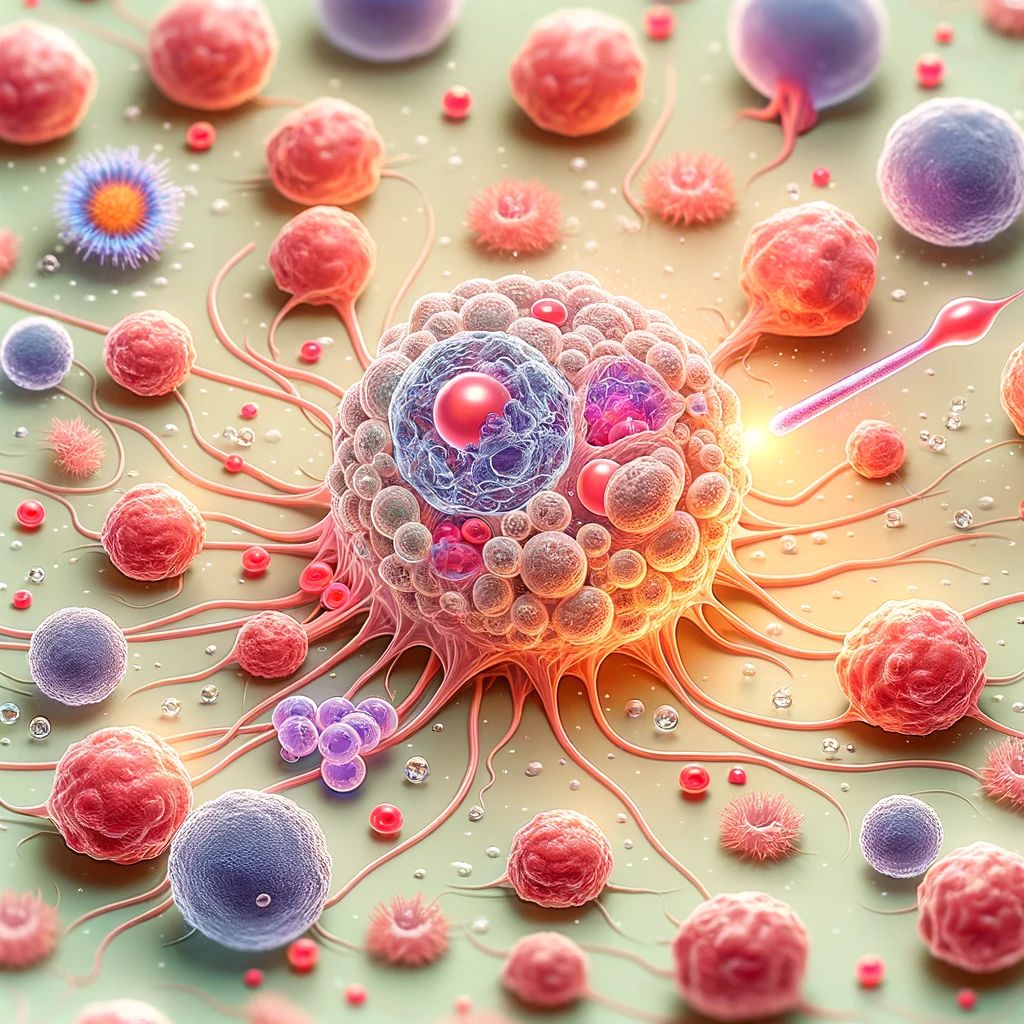
Anticancer Properties of MSCs
Tumor Suppression:
- Direct Tumor Cell Killing: MSCs can secrete factors such as tumor necrosis factor-related apoptosis-inducing ligand (TRAIL), which directly induce apoptosis (programmed cell death) in cancer cells. TRAIL selectively targets cancer cells while sparing normal cells.
- Inhibition of Tumor Growth and Metastasis: MSCs can interfere with the processes essential for tumor growth and spread. For instance, they can secrete matrix metalloproteinase inhibitors that prevent the degradation of the extracellular matrix, a crucial step for cancer cell invasion and metastasis.
Immune System Modulation:
- Enhancement of Immune Responses: MSCs can stimulate the immune system to mount a stronger anti-tumor response. They can activate natural killer (NK) cells and cytotoxic T lymphocytes, which play key roles in recognizing and destroying cancer cells.
- Inhibition of Immune Suppression: Tumors often create an immunosuppressive environment to evade immune attacks. MSCs can counteract this by inhibiting regulatory T cells and myeloid-derived suppressor cells, which are typically recruited by tumors to suppress immune responses.
Targeted Drug Delivery:
- Tropism to Tumor Sites: MSCs have a natural ability to home in on tumor sites, guided by chemokines and other signaling molecules produced by the tumor microenvironment. This property can be harnessed to deliver chemotherapeutic agents or gene therapies directly to the tumor, reducing systemic side effects.
- Engineering MSCs: MSCs can be genetically modified to produce and release therapeutic agents, such as cytokines or oncolytic viruses, specifically within the tumor microenvironment.
Anti-Inflammatory Properties of MSCs
Secretion of Anti-Inflammatory Cytokines:
- Paracrine Effects: MSCs secrete a range of anti-inflammatory cytokines, such as interleukin-10 (IL-10), transforming growth factor-beta (TGF-β), and prostaglandin E2 (PGE2). These molecules help to reduce inflammation by inhibiting the production of pro-inflammatory cytokines and promoting a shift towards a more anti-inflammatory phenotype in immune cells.
Modulation of Immune Cells:
- Macrophages: MSCs can reprogram macrophages from a pro-inflammatory (M1) phenotype to an anti-inflammatory (M2) phenotype. M2 macrophages secrete anti-inflammatory cytokines and growth factors that aid in tissue repair and regeneration.
- T Cells: MSCs can suppress the proliferation and activation of effector T cells, which are involved in promoting inflammation. They also induce the formation of regulatory T cells (Tregs), which help maintain immune tolerance and reduce inflammation.
Inhibition of Inflammatory Pathways:
- NF-κB Pathway: MSCs can inhibit the nuclear factor kappa-light-chain-enhancer of activated B cells (NF-κB) pathway, a key signaling pathway involved in the expression of pro-inflammatory genes. By blocking this pathway, MSCs help to dampen the inflammatory response.
- Indoleamine 2,3-dioxygenase (IDO) Production: MSCs produce IDO, an enzyme that degrades tryptophan, an amino acid necessary for T cell proliferation. By depleting tryptophan, MSCs effectively suppress T cell-mediated inflammation.
Reported Cases of Cancer Induced by MSCs
To date, there have been no reported cases of a direct link between MSC therapy and the induction of cancer in humans. Most clinical trials and therapeutic applications have not reported a significant increase in cancer incidence attributable to MSC treatment. However, due to limited long-term follow-up data, more comprehensive studies are needed to fully understand the risks.
Laboratory and Preclinical Findings:
- Genetic Stability: In vitro studies have shown that MSCs can undergo genetic changes during prolonged culture expansion, which might increase the risk of malignant transformation. These changes include chromosomal aberrations and mutations that could potentially lead to cancer.
- Pro-Tumorigenic Effects in Animal Models: Some animal studies have suggested that MSCs might promote tumor growth and metastasis under certain conditions. This is believed to be due to the MSCs’ ability to create a supportive microenvironment for tumor cells, enhance angiogenesis, or modulate immune responses in favor of tumor survival.
Regulatory and Safety Considerations:
- Rigorous Screening and Monitoring: Regulatory agencies and researchers emphasize the importance of rigorous screening of MSCs for genetic stability and potential tumorigenicity before clinical use. Continuous monitoring of patients receiving MSC therapy is also recommended to detect any adverse effects early.
- Research and Guidelines: Ongoing research aims to better understand the mechanisms by which MSCs might contribute to cancer development and to establish guidelines for their safe use. This includes optimizing culture conditions to maintain genetic stability and developing protocols to minimize the risk of MSCs promoting tumor growth.
Is MSC Therapy Suitable for Cancer Patients?
Given the dual nature of MSCs, their use in patients with cancer or a history of cancer requires careful consideration:
- Potential Benefits: MSCs can enhance the effectiveness of existing cancer therapies, deliver targeted treatments, and modulate the immune system to fight cancer more effectively.
- Potential Risks: There is a theoretical risk that MSCs could support tumor growth or recurrence, particularly if they create a pro-tumorigenic microenvironment.
Conclusion
The anticancer and anti-inflammatory properties of MSCs hold significant therapeutic potential. While there is some evidence from laboratory and animal studies that MSCs could potentially induce cancer or support tumor growth, reported cases in humans are rare and not well-documented. The therapeutic use of MSCs is generally considered safe when appropriate screening and monitoring protocols are followed. However, due to the potential risks, ongoing research and careful patient monitoring remain crucial to ensuring the safety of MSC-based therapies.
For patients with cancer or a history of cancer, the decision to use MSC therapy should be made on a case-by-case basis, considering the potential benefits and risks and in consultation with their healthcare providers.
 Dr Teoh - Family Medicine Specialist, Stem Cell & Immune Therapy