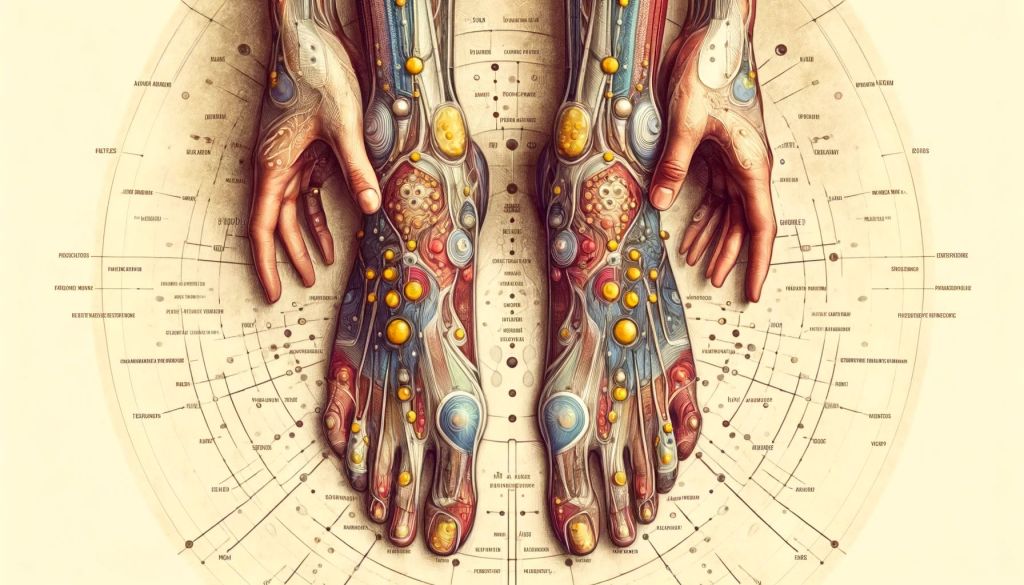
Reflexology is a complementary therapy that involves applying pressure to specific points on the feet, hands, or ears. Practitioners believe these areas correspond to various organs and systems within the body. Despite its historical roots and growing popularity, the scientific community remains divided on its efficacy. This article delves into reflexology’s theoretical foundations, the current state of scientific evidence, potential benefits, challenges, and future research directions.
Understanding Reflexology
Reflexology is grounded in the concept that energy pathways, or “zones,” run throughout the body, linking organs and systems to specific areas on the feet. This concept can be traced back to ancient Egypt and China. Reflexologists believe that disruptions in these pathways can lead to illness and that by applying pressure to specific points, practitioners can restore balance.
- Foot Reflexology Chart: The sole of the foot is divided into multiple areas, each corresponding to a different organ or system. For instance, the tips of the toes are believed to relate to the brain and head, while the arch of the foot is connected to the stomach and pancreas. Practitioners use a reflexology map to identify which points to target.
- Hand and Ear Reflexology: While foot reflexology is most common, the same principles apply to the hands and ears. Each reflex area is believed to correspond with specific regions of the body, and stimulation is thought to promote natural healing.
Theoretical Foundations
The primary theory behind reflexology is the idea of “zone therapy,” which divides the body into ten vertical zones. Each zone runs from the top of the head to the tips of the fingers or toes. Reflexologists believe that stimulating reflex points within these zones affects the energy flow and physiological processes in corresponding body parts.
Additionally, reflexology draws upon principles of traditional Chinese medicine, which emphasizes energy balance and the body’s ability to heal itself.
Scientific Evidence: What Research Shows
1. Pain Management:
Pain management is one of the most well-documented potential benefits of reflexology. A systematic review published in the Journal of Complementary and Alternative Medicine indicated that reflexology might help reduce pain intensity and improve sleep quality in cancer patients. In a randomized controlled trial involving postoperative cancer patients, foot reflexology significantly reduced the need for analgesics compared to a control group.
- Menstrual Pain: A study published in the Obstetrics and Gynecology International found that foot reflexology significantly reduced menstrual pain intensity and duration in women compared to a control group that received a placebo treatment.
- Lower Back Pain: A 2017 meta-analysis published in the International Journal of Nursing Studies revealed that reflexology could be effective in reducing pain and improving function in patients with chronic lower back pain.
2. Stress and Anxiety Reduction:
Reflexology’s potential to alleviate stress and anxiety has been explored in several studies. In a 2019 study published in the International Journal of Nursing Practice, ICU nurses who received foot reflexology reported significant reductions in stress levels and improved sleep quality compared to their colleagues who received standard care.
- Depression: A study in the Journal of Alternative and Complementary Medicine suggested that reflexology might reduce symptoms of depression in patients undergoing hemodialysis.
3. Chronic Conditions:
Reflexology has also been researched for managing various chronic conditions, including diabetes, migraines, and asthma:
- Diabetes: A 2018 study in Complementary Therapies in Clinical Practice showed that reflexology could help diabetic patients improve blood circulation and neuropathy symptoms.
- Migraines: A study in Alternative Therapies in Health and Medicine suggested that reflexology might reduce the frequency and severity of migraines.
- Asthma: A controlled study involving children with asthma revealed improved respiratory function and reduced medication usage in those who received reflexology.
4. Placebo Effect and Limitations:
Despite these promising findings, skeptics attribute much of reflexology’s success to the placebo effect. The relaxing environment, focused attention, and therapeutic touch may naturally promote temporary relief. Furthermore, many studies suffer from small sample sizes, inconsistent methodologies, and a lack of rigorous controls. Reflexology is often used in conjunction with other therapies, making it difficult to isolate its specific effects.
Key Pressure Points in Reflexology
Understanding the pressure points is essential for applying the right stimulation to achieve potential therapeutic benefits. Here are the primary reflexology points on the feet, hands, and ears:
Foot Reflexology Points:
The feet offer a comprehensive map of the body’s organs and systems:
- Head and Brain: The tips of the toes are linked to the head and brain. Stimulating these points may relieve headaches and sinus issues.
- Spine: The inner edge of both feet corresponds to the spine, starting from the heel upwards.
- Lungs and Heart: The ball of the foot is associated with the lungs and heart.
- Liver, Stomach, and Pancreas: The right foot arch corresponds to the liver, the left arch to the stomach, and both arches to the pancreas.
- Kidneys and Bladder: The center of the arch relates to the kidneys, and the bladder point is just above the heel.
Hand Reflexology Points:
- Head and Sinuses: The fingertips correspond to the head and sinuses.
- Lungs and Heart: The pads of the palms are thought to represent the lungs and heart.
- Digestive System: The center of the palms is linked to the digestive system.
- Lower Back and Spine: The palm’s thumb side is connected to the spine.
Ear Reflexology Points:
- Brain and Head: The ear lobes are believed to connect to the head and brain.
- Digestive System: The inner concha (cavity) of the ear relates to the digestive organs.
- Heart and Lungs: The middle part of the ear is linked to the heart and lungs.
- Lower Back and Spine: The upper ridge of the ear corresponds to the spine.
Challenges and Future Research Directions
Standardization Issues:
One significant challenge in reflexology research is the lack of standardization. Variations in practitioners’ techniques and the absence of a consistent treatment protocol make it difficult to compare study outcomes.
Blinding Difficulties:
Blinding is another obstacle, as participants are often aware of the treatment they receive, leading to potential bias.
Future Research Directions:
- Larger Clinical Trials: Larger, well-controlled clinical trials are needed to verify reflexology’s efficacy, particularly in comparison to other complementary therapies.
- Mechanistic Studies: Understanding how reflexology stimulates physiological responses can uncover new insights into its potential health benefits.
- Integration with Conventional Medicine: Research into how reflexology can complement existing medical treatments might yield innovative approaches for managing chronic diseases.
Final Thoughts
Reflexology remains a fascinating field that bridges ancient wisdom and modern therapeutic approaches. While there is moderate evidence supporting its use in managing pain, stress, and some chronic conditions, the current data does not provide definitive answers. More rigorous and large-scale clinical trials are necessary to fully understand its potential benefits and limitations.
If you are considering incorporating reflexology into your health and wellness regimen, consult your healthcare provider to ensure it aligns with your current treatment plan. When combined with other evidence-based therapies, reflexology might offer holistic support that addresses both the physical and psychological aspects of health.
References
- Journal of Complementary and Alternative Medicine: A systematic review of pain management and reflexology studies.
- International Journal of Nursing Practice: Reflexology’s impact on ICU nurses’ stress levels.
- Alternative Therapies in Health and Medicine: Reflexology’s effect on chronic fatigue syndrome and migraines.
- Complementary Therapies in Clinical Practice: Reflexology’s potential benefits for diabetic neuropathy.
- Obstetrics and Gynecology International: Reflexology and menstrual pain reduction.
- International Journal of Nursing Studies: Reflexology for chronic lower back pain.
- Journal of Alternative and Complementary Medicine: Reflexology and depression.
 Dr Teoh - Family Medicine Specialist, Stem Cell & Immune Therapy