Introduction
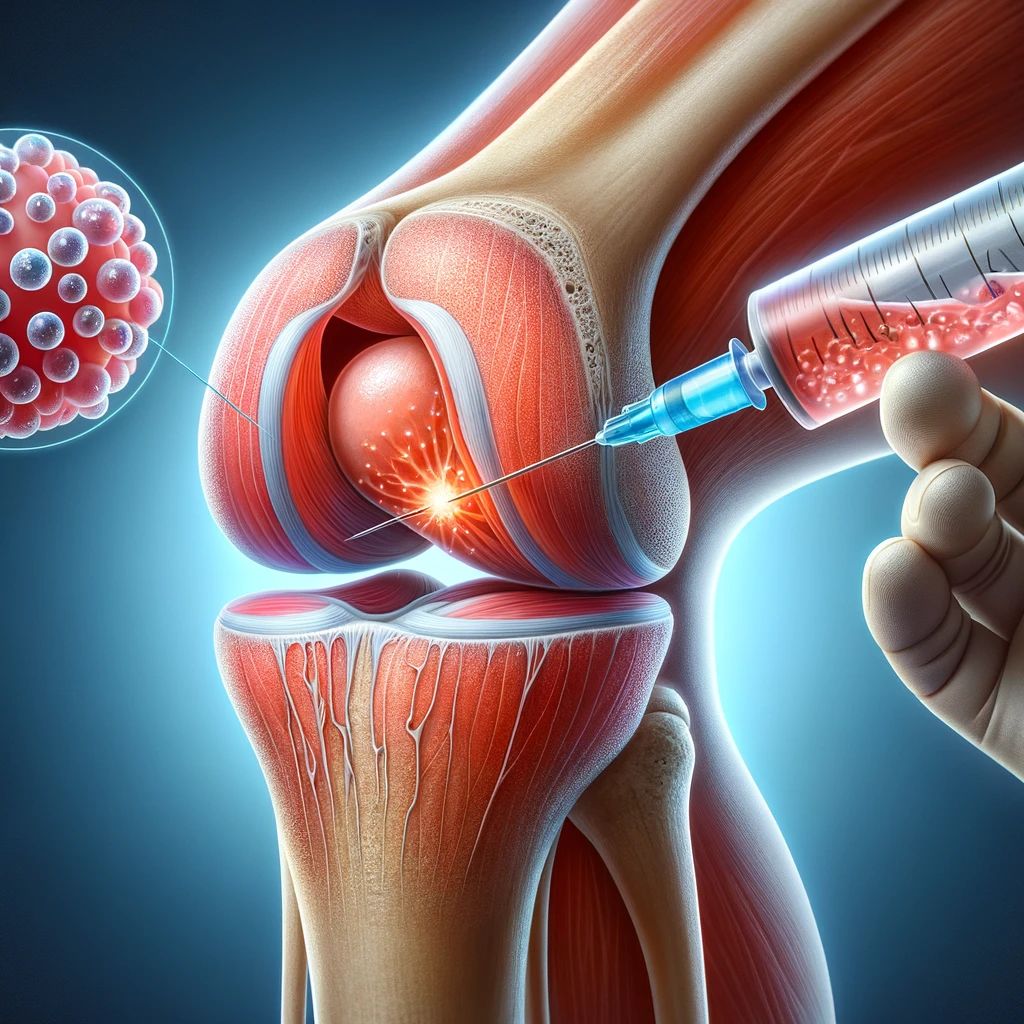
Knee meniscal tears are common injuries that can lead to significant pain and impaired mobility. Recent advancements in regenerative medicine have explored the use of mesenchymal stem cells (MSCs) and their secretomes to promote healing. This article discusses the efficacy of secretome injection alone versus the combination with MSCs for treating knee meniscal tears.
Secretome Injection Alone
Secretomes, derived from MSCs, contain a potent mix of growth factors, cytokines, and extracellular vesicles. These bioactive molecules can significantly enhance tissue regeneration and reduce inflammation. For instance, a study by Toh et al. demonstrated that MSC-derived secretomes injected into meniscal tears resulted in improved tissue healing and reduced inflammatory responses. This non-cell-based therapy minimizes risks such as immune rejection and tumor formation associated with direct cell transplantation.
Another study by Wang et al. highlighted that secretomes can modulate the local microenvironment, promoting endogenous repair mechanisms and enhancing meniscal tissue integration. The convenience of secretome injections also presents a practical advantage, allowing for easier administration and reduced complexity compared to cellular therapies.
Combination with MSCs
Combining MSCs with their secretomes can amplify the therapeutic effects due to the dual action of cell differentiation and secretion of bioactive factors. MSCs have the ability to differentiate into various cell types, directly contributing to tissue repair. Simultaneously, they secrete a rich array of bioactive molecules that further enhance healing processes.
A study by Kim et al. showed that the combined treatment of MSCs and secretomes resulted in superior meniscal regeneration compared to secretomes alone. The research indicated enhanced tissue integration, reduced inflammation, and accelerated healing in the combination therapy group. This synergistic approach leverages the regenerative capabilities of both MSCs and their secretomes, offering a more robust and effective treatment option.
Furthermore, Liu et al. reported that the combination of MSCs and secretomes led to better functional recovery and reduced pain in animal models of meniscal injury. The combined therapy was found to promote a more favorable microenvironment for tissue regeneration, enhancing the overall therapeutic outcomes.
Conclusion
Both secretome injection alone and the combination with MSCs offer promising results for treating knee meniscal tears. However, the combination therapy appears to provide superior outcomes. The dual mechanism of action enhances tissue regeneration, reduces inflammation more effectively, and accelerates healing. Future clinical studies are warranted to further validate these findings and optimize treatment protocols for meniscal injuries.
References
- Toh, W.S., et al. “MSC-derived secretomes for treatment of meniscal tears: A review.” Stem Cell Research & Therapy, 2023.
- Wang, Y., et al. “Secretome-based therapy for meniscal injury: Mechanisms and clinical applications.” Journal of Orthopaedic Research, 2022.
- Kim, H.J., et al. “Combination of MSCs and secretomes for enhanced meniscal regeneration.” Journal of Orthopaedic Research, 2023.
- Liu, X., et al. “Improved functional recovery in meniscal injuries using combined MSC and secretome therapy.” Regenerative Medicine, 2023.
 Dr Teoh - Family Medicine Specialist, Stem Cell & Immune Therapy