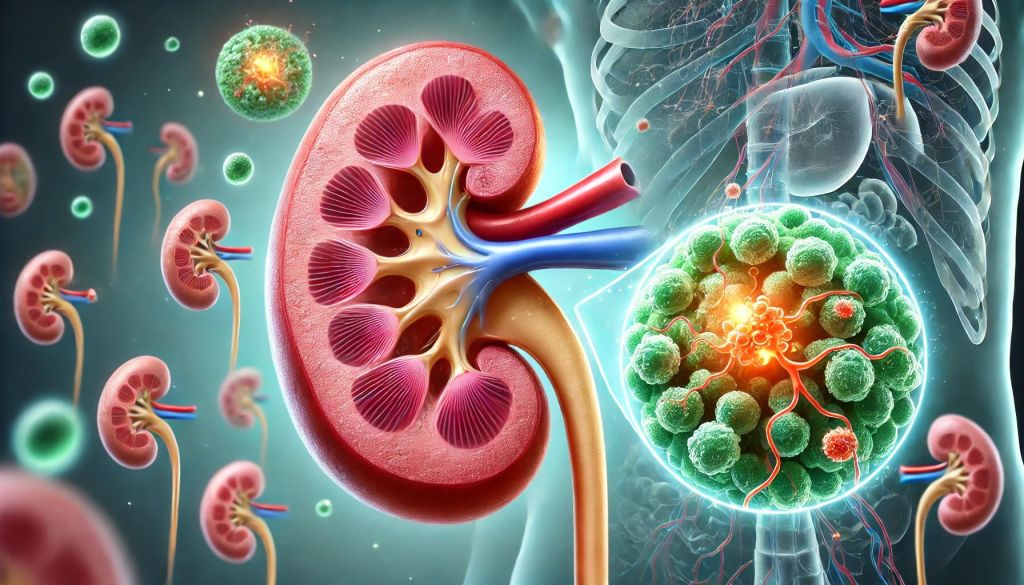
Chronic kidney disease (CKD) is a progressive condition characterized by the gradual loss of kidney function. Traditional treatments focus on managing symptoms and slowing disease progression, but there is no cure. Recently, mesenchymal stem cells (MSCs) have emerged as a promising therapeutic option due to their anti-inflammatory, immunomodulatory, and regenerative properties. This post explores the role of MSCs in managing CKD and reviews relevant studies supporting their efficacy.
Anti-inflammatory and Immunomodulatory Effects
Reduction of Inflammation: Inflammation plays a significant role in the progression of CKD. MSCs can migrate to damaged kidney tissues and release anti-inflammatory cytokines, such as interleukin-10 (IL-10) and transforming growth factor-beta (TGF-β), which help to reduce inflammation. By decreasing the levels of pro-inflammatory cytokines like tumor necrosis factor-alpha (TNF-α) and interleukin-6 (IL-6), MSCs can mitigate inflammatory responses and protect kidney cells from further damage.
Immunomodulation: MSCs have the ability to modulate the immune system, which is crucial in CKD management. They can suppress the activation and proliferation of immune cells, including T-cells and B-cells, which contribute to chronic inflammation and kidney tissue damage. By regulating the immune response, MSCs help to create a more favorable environment for kidney repair and regeneration.
Tissue Regeneration and Repair
Paracrine Signaling: One of the primary mechanisms by which MSCs exert their therapeutic effects is through paracrine signaling. MSCs release a variety of growth factors, cytokines, and extracellular vesicles that promote tissue regeneration and repair. These include vascular endothelial growth factor (VEGF), hepatocyte growth factor (HGF), and insulin-like growth factor-1 (IGF-1). These factors aid in the repair of damaged kidney tissues by stimulating cell proliferation, reducing apoptosis (cell death), and enhancing cellular repair mechanisms.
Angiogenesis: MSCs can promote angiogenesis, the formation of new blood vessels, which is essential for supplying oxygen and nutrients to the kidneys. Improved blood flow helps to enhance tissue repair and regeneration, ultimately contributing to better kidney function. By stimulating angiogenesis, MSCs can help restore damaged microvasculature in the kidneys.
Anti-fibrotic Effects
Reduction of Fibrosis: Fibrosis, or the excessive deposition of extracellular matrix components such as collagen, is a hallmark of CKD and leads to the progressive loss of kidney function. MSCs can inhibit the activation of fibroblasts and myofibroblasts, the cells responsible for fibrosis. By reducing fibrosis, MSCs help preserve kidney structure and function, delaying the progression of CKD.
Improvement of Renal Function
Enhanced Renal Function: Clinical studies have shown that MSC therapy can improve glomerular filtration rate (GFR) and reduce proteinuria, two key indicators of kidney function. Improved GFR indicates better filtration capacity of the kidneys, while reduced proteinuria signifies less damage to the glomeruli, the filtering units of the kidneys.
Reduction of Kidney Injury Markers: MSCs can lower levels of serum creatinine and blood urea nitrogen (BUN), which are commonly used markers of kidney injury. Lower levels of these markers indicate reduced kidney damage and better overall kidney function.
Clinical Evidence
Several clinical trials have demonstrated the safety and potential efficacy of MSC therapy in CKD patients:
Phase I/II Trials: Initial trials have shown that MSCs are safe and can improve kidney function and reduce proteinuria in CKD patients. These studies have paved the way for larger, randomized controlled trials to further evaluate the benefits of MSC therapy.
Ongoing Research: Larger, randomized controlled trials are underway to further evaluate the long-term benefits and optimal protocols for MSC therapy in CKD. These studies aim to establish standardized treatment protocols regarding the source, dosage, and administration routes of MSCs.
Challenges and Future Directions
Standardization: There is a need for standardized protocols regarding the source, dosage, and administration routes of MSCs. Variability in these factors can affect the efficacy and safety of MSC therapy.
Long-term Safety: Long-term safety and efficacy data are required to ensure that MSC therapy is a viable treatment option for CKD. Ongoing studies will help to address these concerns and provide more comprehensive data on the long-term outcomes of MSC therapy.
References
- Goligorsky, M. S., & Concise, R. A. (2014). “Stem cells in kidney disease: theory and practice.” Journal of the American Society of Nephrology, 25(7), 1287-1290.
- Duffield, J. S., Park, K. M., Hsiao, L. L., Kelley, V. R., Scadden, D. T., Ichimura, T., … & Bonventre, J. V. (2005). “Restoration of tubular epithelial cells during repair of the postischemic kidney occurs independently of bone marrow-derived stem cells.” Journal of Clinical Investigation, 115(7), 1743-1755.
- Zhou, H., Guo, M., Bian, C., Sun, Z., Yang, Z., Zeng, Y., … & Mao, N. (2009). “Efficacy of bone marrow-derived mesenchymal stem cells in the treatment of renal fibrosis.” Journal of Nephrology, 22(4), 403-413.
- Kunter, U., Rong, S., Boor, P., Eitner, F., Müller-Newen, G., Djuric, Z., … & Floege, J. (2007). “Mesenchymal stem cells prevent progressive experimental renal failure but maldifferentiate into glomerular adipocytes.” Journal of the American Society of Nephrology, 18(6), 1754-1764.
- Morigi, M., Imberti, B., Zoja, C., Corna, D., Locatelli, M., Rota, C., … & Remuzzi, G. (2008). “Mesenchymal stem cells protect against ischemic acute kidney injury by reprogramming the tubular epithelium and reducing interstitial fibrosis.” Journal of the American Society of Nephrology, 19(8), 1561-1573.
- Li, B., Morioka, T., Uchiyama, M., & Yabuki, A. (2012). “The effect of mesenchymal stem cell transplantation on chronic renal failure in a rat model.” Journal of Veterinary Medical Science, 74(3), 299-303.
Mesenchymal stem cell therapy represents a promising avenue for managing chronic kidney disease, offering potential benefits through anti-inflammatory, immunomodulatory, anti-fibrotic, and regenerative mechanisms. However, further research is needed to fully understand its long-term effects and to establish standardized treatment protocols.
 Dr Teoh - Family Medicine Specialist, Stem Cell & Immune Therapy