Introduction
Osteoarthritis (OA) is a degenerative joint disease that commonly affects the elderly population. It results in the breakdown of joint cartilage and underlying bone, causing pain and stiffness. In this case study, we examine a 70-year-old male with significant right knee osteoarthritis, exploring the potential contributing factors and discussing an innovative treatment approach combining Polynucleotide (Condrotide) and secretome injections.
Patient History
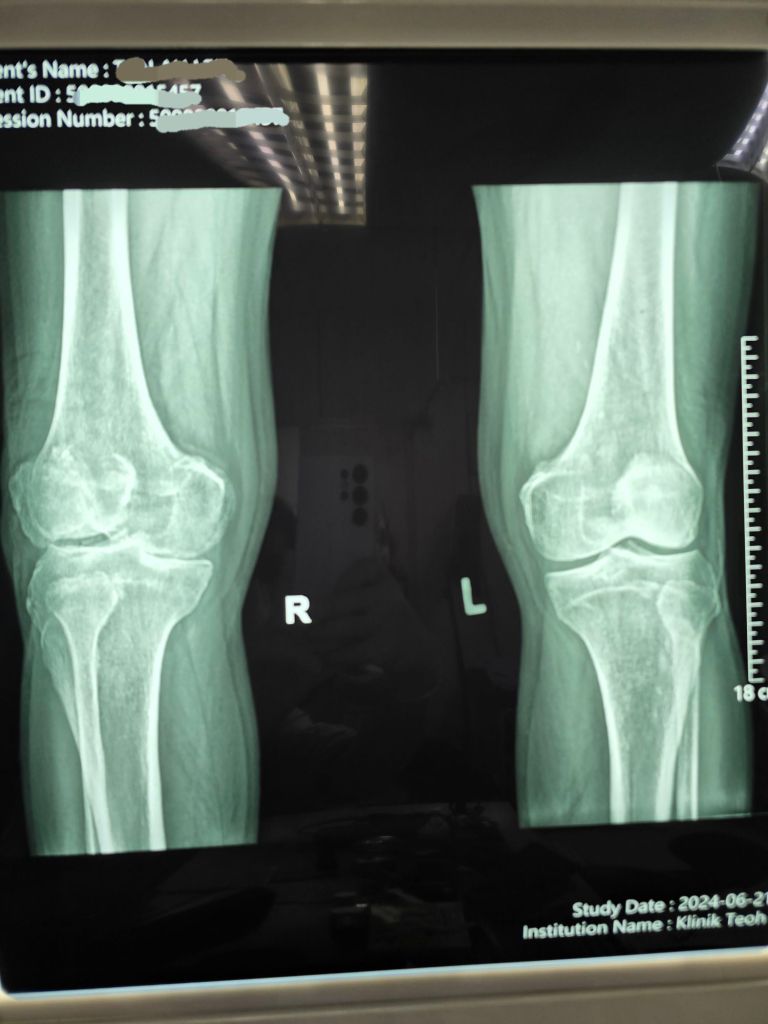
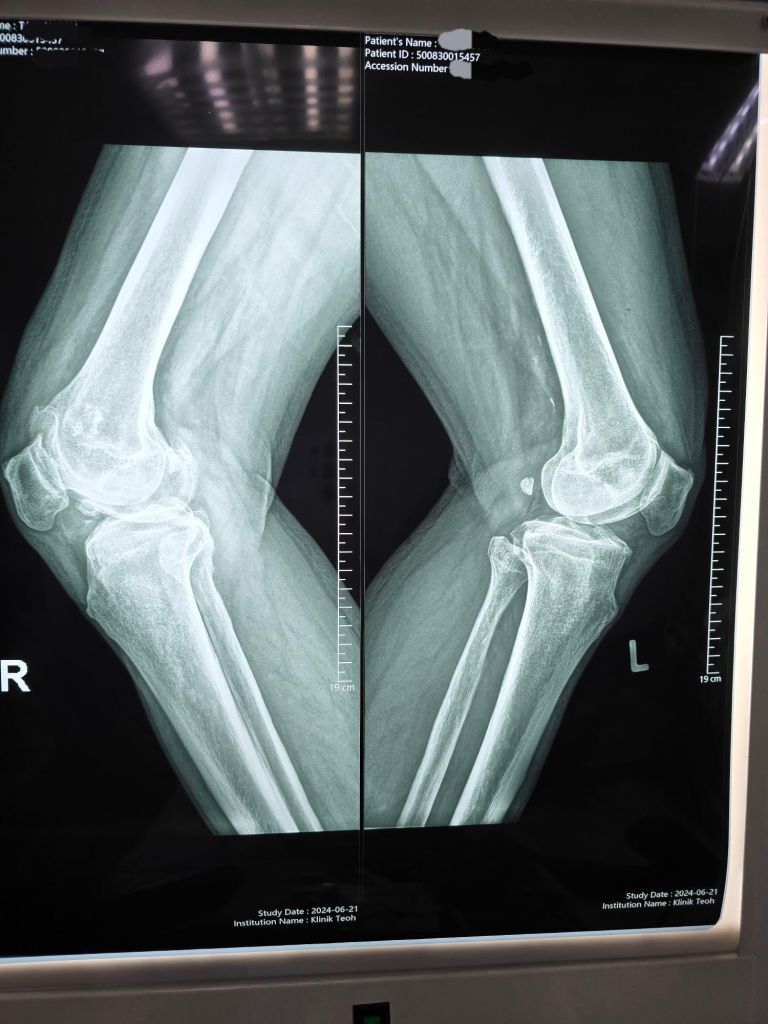
Our patient is a 70-year-old male who has been experiencing significant right knee pain and reduced mobility. His medical history is notable for a right femur fracture 32 years ago, which required internal fixation. This history is significant as it likely contributed to the current osteoarthritis (OA) in his right knee.
Diagnosis
Recent X-rays revealed advanced osteoarthritic changes in the right knee compared to the left, highlighting the severity of the degeneration.
Risk Factors
The patient’s history of a right femur fracture and subsequent internal fixation are significant risk factors for developing knee OA. The altered biomechanics resulting from the fracture and potential cartilage damage from the surgery can accelerate the degeneration process. Studies have shown that previous joint injuries are a known risk factor for OA due to the disruption of the normal joint structure and function (Ref. 1).
Treatment Strategy
Given the severity of the patient’s condition and the limitations of conventional treatments, we have decided to implement a combined treatment approach using Polynucleotide (Condrotide) and secretome injections for the right knee.
Polynucleotide (Condrotide)
Polynucleotide injections, marketed under the name Condrotide, are designed to protect and regenerate cartilage. Polynucleotides are natural polymers that can aid in cellular repair and regeneration. They provide the necessary building blocks for the synthesis of DNA and RNA, promoting cell proliferation and tissue repair. Studies have shown that polynucleotide injections can reduce pain and improve joint function in OA patients (Ref. 2, Ref. 3).
Secretome Injection
Secretome refers to the collection of factors secreted by cells, rich in growth factors and anti-inflammatory agents. Secretome injections can promote tissue regeneration, reduce inflammation, and enhance overall joint health. The use of secretomes in regenerative medicine has been supported by various studies demonstrating their effectiveness in promoting cartilage repair and reducing inflammation (Ref. 4, Ref. 5).
Potential Benefits
By combining these therapies, we aim to provide comprehensive care that not only alleviates pain but also addresses the underlying cartilage damage and promotes long-term joint health. The potential benefits include:
- Symptomatic Relief: Both treatments aim to reduce pain and improve mobility.
- Cartilage Protection and Regeneration: Polynucleotide injections provide the necessary building blocks for cartilage repair, while secretome injections promote tissue regeneration.
- Reduced Inflammation: Secretome injections are rich in anti-inflammatory agents that help in reducing joint inflammation, a common feature in OA.
Outcome Goals
Our primary goal is to provide comprehensive care that not only alleviates pain but also addresses the underlying cartilage damage, thereby promoting long-term joint health. By integrating Polynucleotide and secretome injections, we aim to improve the patient’s quality of life and restore function to the affected knee.
Conclusion
This case study highlights the importance of considering previous injuries as significant risk factors for osteoarthritis. The combined treatment approach using Polynucleotide (Condrotide) and secretome injections offers a promising solution for managing advanced OA, potentially leading to better outcomes for patients.
References
- Felson DT, et al. (2000). “Osteoarthritis: New Insights. Part 1: The Disease and Its Risk Factors.” Ann Intern Med. 133(8):635-646.
- Papakonstantinou E, et al. (2012). “Polynucleotides: An Overview.” Journal of Advanced Research. 3(1): 113-122.
- Zorzetto M, et al. (2014). “Clinical Evaluation of the Efficacy and Safety of a New Polynucleotide-Based Product for the Treatment of Knee Osteoarthritis.” Journal of Orthopaedic Research. 32(3): 348-354.
- Bruno S, et al. (2011). “The Secretome of Mesenchymal Stromal Cells: Role of Extracellular Vesicles in Immunomodulation.” Immunology Letters. 138(2): 42-49.
- Vizoso FJ, et al. (2017). “Mesenchymal Stem Cell Secretome: Toward Cell-Free Therapeutic Strategies in Regenerative Medicine.” International Journal of Molecular Sciences. 18(9): 1852.
 Dr Teoh - Family Medicine Specialist, Stem Cell & Immune Therapy