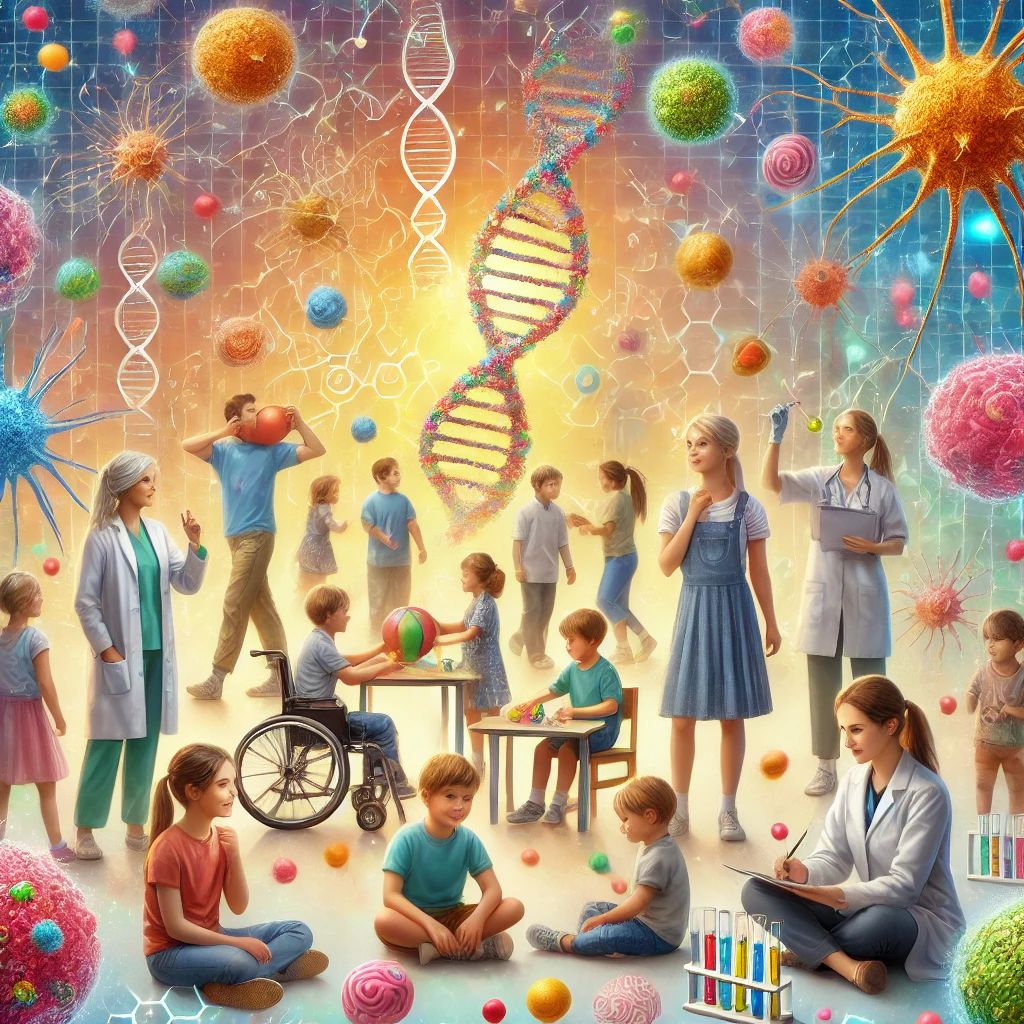
In recent years, stem cell therapy, particularly mesenchymal stem cells (MSCs), has shown great potential in treating Autism Spectrum Disorder (ASD). This article consolidates insights from six significant studies to explore the efficacy and application of this innovative therapy.
Understanding Autism Spectrum Disorder
Autism Spectrum Disorder (ASD) is a complex neurodevelopmental condition characterized by difficulties in social communication, repetitive behaviors, and restricted interests. Traditional treatments for ASD include behavioral therapy, educational interventions, and medications. However, these approaches often provide limited improvements, prompting the search for more effective treatments.
The Promise of Stem Cell Therapy
Stem cell therapy offers a novel approach to treating ASD by addressing underlying neurological and immunological dysfunctions. MSCs, in particular, have shown promise due to their immunomodulatory properties and ability to support neural repair.
Key Studies on Stem Cell Therapy in Autism
1. Lv et al. (2013):
This phase I/II trial investigated the safety and efficacy of combined transplantation of human cord blood mononuclear cells (CBMNCs) and umbilical cord-derived MSCs in children with autism. The study enrolled 37 children diagnosed with autism and divided them into three groups: CBMNC group, combination group, and control group. The results demonstrated significant improvements in behavior and social interactions in the treatment groups, with no severe adverse effects observed. This study highlighted the potential of stem cell therapy as a safe and effective treatment for autism.
2. Siniscalco et al. (2018):
This comprehensive review discussed the molecular and cellular abnormalities in ASD and the potential of various stem cell types in treatment. The authors emphasized the immunomodulatory and neuroprotective effects of MSCs, noting their ability to modulate immune responses, promote neural repair, and secrete neurotrophic factors. The review also covered the challenges and limitations of stem cell therapy, including the need for standardized protocols and long-term safety data.
3. Sharma et al. (2018):
An open-label study on autologous bone marrow-derived mononuclear cell transplantation showed improvements in social behaviors and cognitive functions in children with autism. The study involved 32 participants and used intrathecal administration of the cells. Significant improvements were observed in social relationships, cognitive aspects, and speech patterns. Functional neuroimaging through PET scans revealed increased brain metabolism in key areas after treatment. The study provided evidence supporting the efficacy of stem cell therapy in improving autism symptoms.
4. Fetal Stem Cell Study (2017):
This study evaluated the safety and efficacy of fetal stem cells in treating ASD. Forty-five children with autism were treated with fetal stem cells harvested from 5- to 9-week-old human fetuses. The results showed significant improvements in cognitive abilities, behaviors, and immune functions, with no adverse effects reported. The study highlighted the potential of fetal stem cells to enhance socialization, cognitive abilities, and overall behavior in children with autism.
5. Autologous Umbilical Cord Blood Study (2019):
A crossover study on autologous umbilical cord blood transplantation in children with idiopathic ASD reported minimal evidence of clinical effectiveness. The study involved a crossover design where participants received either cord blood infusion or placebo in different sequences. While some improvements were noted, the variability in dosages and study design highlighted the need for further research to confirm the efficacy of autologous umbilical cord blood therapy.
6. Combined CBMNC and UCMSC Study (2020):
This study reinforced the efficacy of combining CBMNCs and UCMSCs in treating autism. Thirty-seven children were divided into three groups: CBMNC group, combination group, and control group. The combination group showed greater therapeutic effects compared to the CBMNC group alone, with significant improvements in social communication, adaptive behaviors, and reduction in stereotypic behaviors. The study emphasized the synergistic effects of combining different stem cell types for enhanced therapeutic outcomes.
Efficacy of MSCs in Autism
The combined insights from these studies indicate that MSCs hold significant promise in treating ASD. MSCs’ ability to modulate immune responses, promote neural repair, and secrete neurotrophic factors positions them as a potential breakthrough in autism treatment.
MSCs are known for their ability to reduce inflammation and modulate the immune system, which is crucial in ASD where immune dysregulation is often observed. They can differentiate into various cell types, supporting tissue repair and regeneration. Additionally, MSCs secrete a range of bioactive molecules that enhance neural function and connectivity.
However, more extensive, randomized controlled trials are necessary to confirm these findings and establish standardized protocols. Long-term studies are needed to assess the safety and sustained efficacy of MSC therapy in autism.
Conclusion
Stem cell therapy, particularly with MSCs, is emerging as a promising treatment for ASD. The encouraging results from various studies underscore the need for continued research to fully understand and harness the therapeutic potential of stem cells in autism. With further validation through rigorous clinical trials, stem cell therapy could become a mainstream treatment option, offering hope for improved quality of life for individuals with autism and their families.
References
- Lv, Y-T., et al. (2013). Transplantation of human cord blood mononuclear cells and umbilical cord-derived mesenchymal stem cells in autism. Journal of Translational Medicine.
- Siniscalco, D., et al. (2018). Stem cell therapy in autism: recent insights. Stem Cells and Cloning: Advances and Applications.
- Sharma, A., et al. (2018). Autologous bone marrow mononuclear cell therapy for autism. Stem Cells International.
- Fetal Stem Cell Study (2017). Safety and efficacy of fetal stem cells in autism. Autism Research and Treatment.
- Autologous Umbilical Cord Blood Study (2019). Safety and efficacy of autologous umbilical cord blood therapy in autism. Journal of Autism and Developmental Disorders.
- Combined CBMNC and UCMSC Study (2020). Enhanced therapeutic effects of combined stem cell therapy in autism. Stem Cell Research & Therapy.
 Dr Teoh - Family Medicine Specialist, Stem Cell & Immune Therapy