Introduction
Squamous Cell Carcinoma (SCC) is a type of skin cancer that, while often treatable in its early stages, can become aggressive and life-threatening if not effectively managed. As the second most common form of skin cancer, SCC accounts for a significant portion of skin cancer cases worldwide, particularly among older adults and individuals with prolonged exposure to ultraviolet (UV) radiation. While traditional treatments like surgery and radiation therapy are often successful, some cases of SCC prove resistant to these interventions, necessitating the exploration of alternative treatment strategies.
In this article, we delve into the promising role of Natural Killer (NK) cell therapy in treating advanced SCC, illustrated through a case study of an 87-year-old patient whose cancer has shown rapid progression despite prior treatments.
Case Overview: A Challenging Instance of Advanced SCC


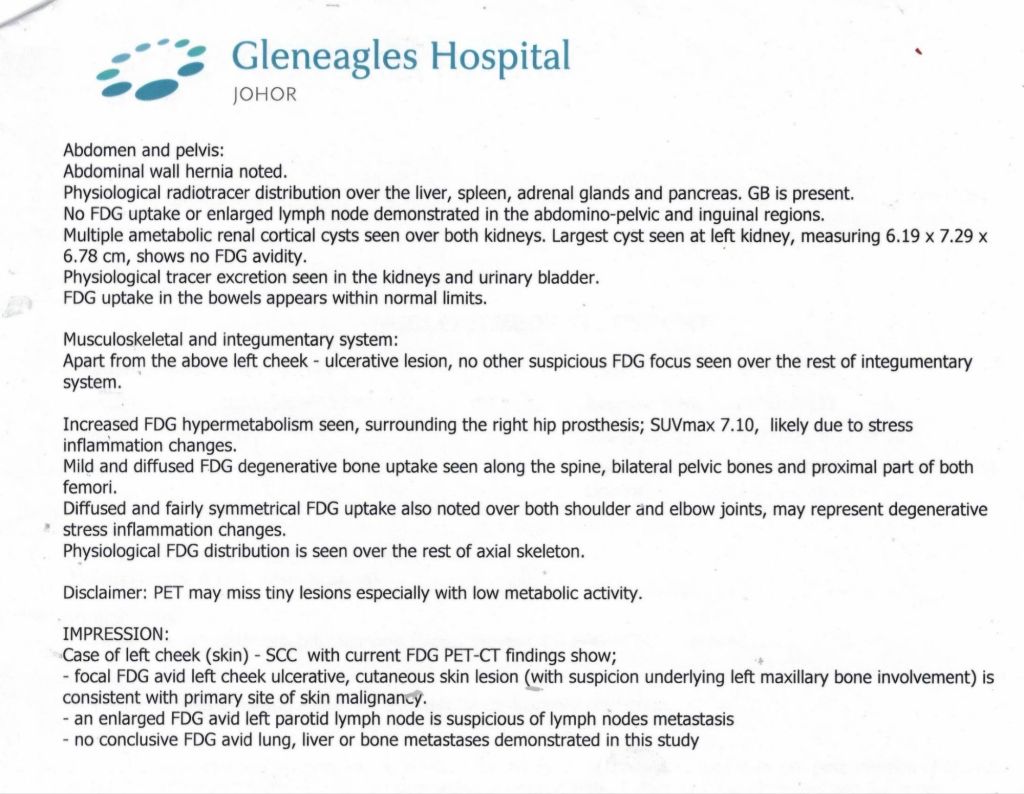
The patient in question is an 87-year-old woman who has been battling a severe form of SCC located on her left cheek. Despite receiving two cycles of radiotherapy—a common treatment for localized skin cancers—the tumor not only failed to shrink but also continued to grow and spread locally. This rapid progression highlighted the limitations of conventional therapies in her case and prompted her medical team to consider alternative approaches.
Given the aggressive nature of her SCC and the poor response to radiotherapy, the decision was made to initiate an innovative treatment plan involving allogeneic Natural Killer (NK) cell therapy. Today, she received her first dose of 1.5 million pure allogeneic NK cells, with two additional cycles planned as part of a comprehensive effort to control the disease.
Understanding Squamous Cell Carcinoma: Characteristics and Risks
Squamous Cell Carcinoma originates from the squamous cells, which are flat cells that make up the outermost layer of the skin (the epidermis). Unlike basal cell carcinoma, which tends to grow slowly, SCC can be more aggressive, particularly when it affects areas of the skin that have been exposed to the sun for prolonged periods. Common sites for SCC include the face, ears, neck, lips, and backs of the hands—areas that receive the most UV exposure.
The typical presentation of SCC includes rough, scaly patches, open sores, or elevated growths that may crust or bleed. Although early-stage SCC can often be treated effectively with surgery or localized therapies, once the cancer progresses beyond the epidermis and invades deeper tissues, it becomes much more challenging to treat. Advanced SCC can metastasize to other parts of the body, including lymph nodes and internal organs, making it a serious and potentially life-threatening condition.
The Role of NK Cells in the Immune System
Natural Killer (NK) cells are a critical component of the body’s innate immune system. Unlike adaptive immune cells, such as T-cells, which require previous exposure to specific antigens to mount an attack, NK cells can recognize and eliminate abnormal cells, including cancer cells, without prior sensitization. This ability to act swiftly and broadly makes NK cells a first line of defense against infections and malignancies.
NK cells are equipped with receptors that can detect stress signals on the surface of infected or transformed cells, such as those found in cancer. Upon recognizing these signals, NK cells release cytotoxic granules that induce apoptosis (programmed cell death) in the target cells. This mechanism allows NK cells to play a vital role in controlling tumor growth and preventing the spread of cancer.
Allogeneic NK Cell Therapy: A Promising Frontier in Cancer Treatment

The use of allogeneic NK cells—those derived from a healthy donor rather than the patient themselves—represents a cutting-edge approach in cancer immunotherapy. Allogeneic NK cells are often more effective than autologous (patient-derived) NK cells, particularly in older patients or those whose immune systems are compromised. This is because NK cells from a donor can be selected for their high activity and low susceptibility to the immunosuppressive environment often created by tumors.
In the context of this 87-year-old patient with advanced SCC, the allogeneic NK cells were chosen to provide a more robust immune response than her own cells might be able to muster. The hope is that these donor-derived NK cells will recognize and destroy the cancer cells that have been resistant to other treatments, slowing or halting the progression of the disease.
Scientific Evidence Supporting NK Cell Therapy in SCC
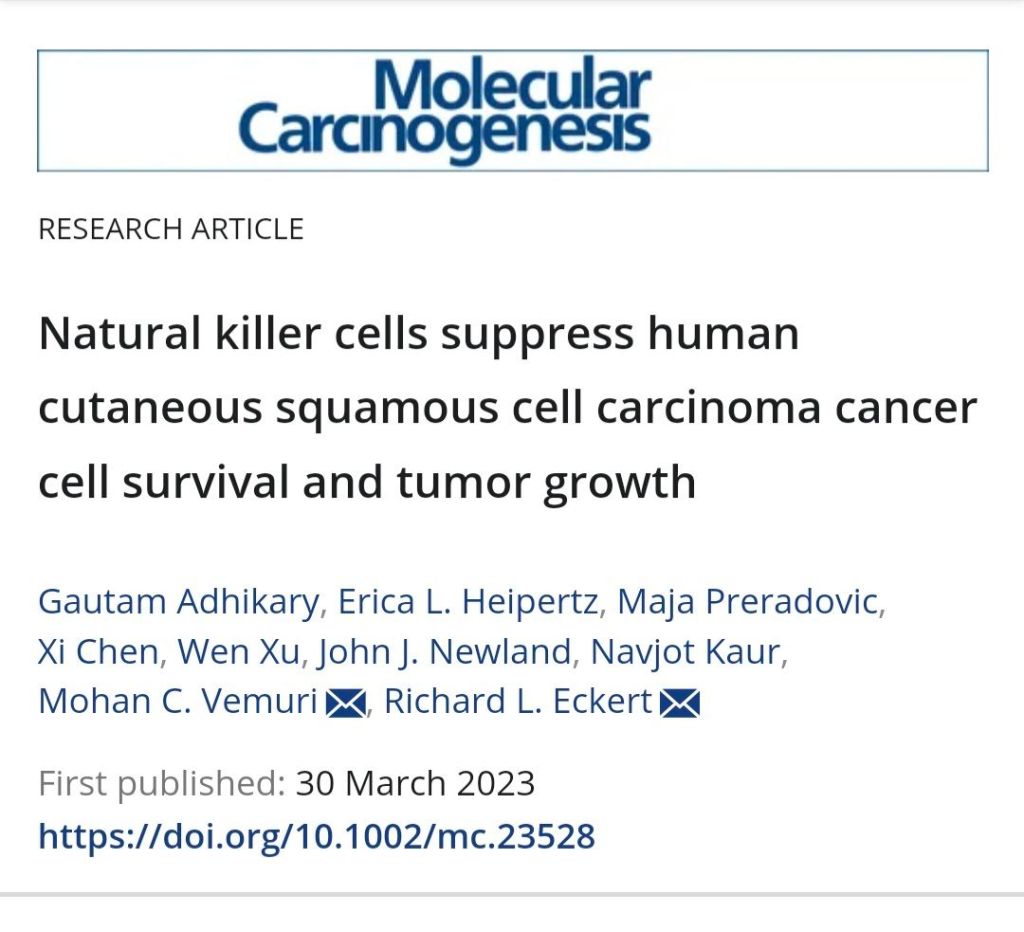
The potential of NK cells to treat SCC is supported by growing scientific evidence. A pivotal study by Adhikary and colleagues, published in Molecular Carcinogenesis in 2023, provided key insights into the effectiveness of NK cells against cutaneous SCC. The researchers demonstrated that NK cells could suppress the survival and growth of SCC cancer cells in vitro and in vivo, highlighting the therapeutic potential of NK cell-based treatments for this type of cancer.
This study and others like it underscore the unique ability of NK cells to target and eliminate cancer cells that have become resistant to conventional treatments. By inducing apoptosis in SCC cells, NK cells can help reduce tumor size and limit the spread of cancer, offering a new avenue of hope for patients with advanced, treatment-resistant forms of SCC.
Conclusion: The Future of NK Cell Therapy in Cancer Treatment
NK cell therapy represents a promising advancement in the treatment of advanced squamous cell carcinoma, especially for patients who have not responded well to traditional therapies like surgery and radiation. By leveraging the innate tumor-fighting abilities of NK cells, particularly those derived from healthy donors, this innovative approach aims to improve outcomes and extend the lives of patients facing aggressive cancers.
As research continues to explore the full potential of NK cells in cancer therapy, it is likely that this treatment will become an increasingly important tool in the oncologist’s arsenal. For patients like our 87-year-old patient, who are running out of conventional options, NK cell therapy offers a new glimmer of hope in the fight against cancer.
Reference:
Adhikary G, Heipertz EL, Preradovic M, Chen X, Xu W, Newland JJ, Kaur N, Vemuri MC, Eckert RL. Natural killer cells suppress human cutaneous squamous cell carcinoma cancer cell survival and tumor growth. Mol Carcinog. 2023 Jun;62(6):845-854. doi: 10.1002/mc.23528. Epub 2023 Mar 30. PMID: 36994661.
 Dr Teoh - Family Medicine Specialist, Stem Cell & Immune Therapy