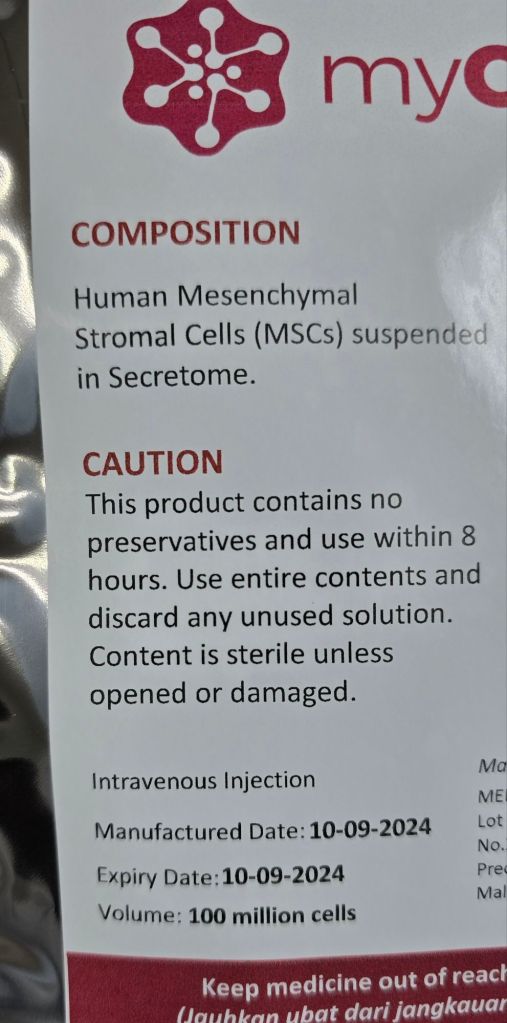
In today’s medical practice, regenerative medicine therapies, such as mesenchymal stem cell (MSC) therapy, are gaining traction due to their promising ability to modulate inflammation and promote tissue repair. In this article, we will discuss the case of a 58-year-old male who received 100 million IV mesenchymal stem cells (MSC) for his various health conditions, including hyperlipidemia, chronic smoking history, and elevated blood markers like homocysteine, PSA, and CA 72-4.
Patient History
This 58-year-old patient has a history of:
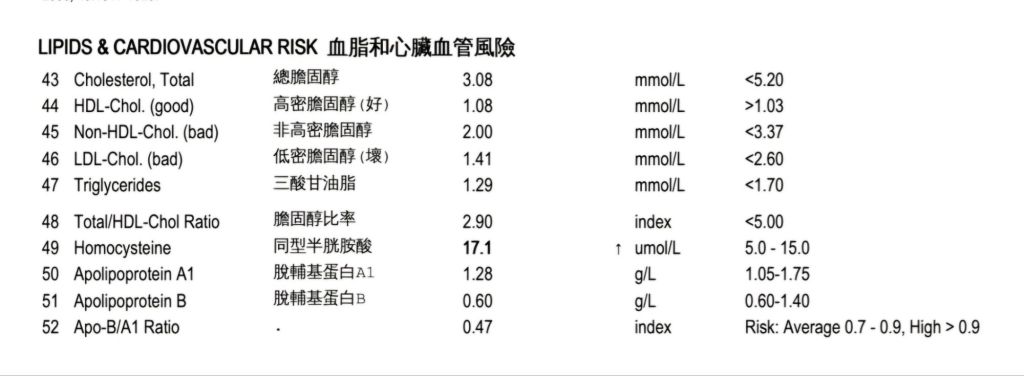
Hyperlipidemia: His LDL cholesterol levels are well-controlled with statin therapy, which reduces the risk of cardiovascular diseases.
Chronic Smoking: A significant risk factor for cardiovascular and respiratory diseases.
Elevated Blood Markers: Recent blood tests revealed:
Homocysteine: 17.1 µmol/L (elevated)
PSA: 5.2 ng/mL (mildly elevated)
CA 72-4: 10.2 U/mL (mildly elevated)

Understanding the Elevated Markers
1. Hyperlipidemia and Homocysteine: While his LDL cholesterol is under control, elevated homocysteine levels indicate a higher risk for cardiovascular diseases. Homocysteine is an amino acid linked to inflammation and oxidative stress, both of which can damage arterial walls and increase the likelihood of atherosclerosis (Hu & Cheng, 2019). Studies show that high homocysteine levels are associated with an increased risk of stroke, heart attack, and other vascular diseases.
2. Chronic Smoking: Smoking exacerbates cardiovascular risks, contributing to oxidative stress, which damages the endothelium and causes chronic inflammation (Shi et al., 2018). In addition, it heightens the risk for lung diseases, such as chronic obstructive pulmonary disease (COPD), and accelerates the aging of tissues throughout the body.
3. Elevated PSA and CA 72-4: The patient’s PSA level is mildly elevated, which may indicate benign prostatic hyperplasia (BPH), a common condition in older men, or require further investigation for prostate health. CA 72-4, though usually associated with gastrointestinal cancers, can be slightly elevated in chronic smokers or due to inflammation (Javed et al., 2019). While not immediately alarming, these markers require ongoing monitoring.
How MSC Therapy Can Help
MSC therapy has shown potential in addressing several of the patient’s conditions:
1. Cardiovascular Health and Homocysteine: Mesenchymal stem cells (MSCs) can help reduce inflammation and oxidative stress, two major factors that contribute to cardiovascular disease. According to studies, MSCs improve endothelial function, support tissue repair, and promote vascular health. By mitigating inflammation, MSCs may help reduce homocysteine levels and their negative cardiovascular effects (Hu & Cheng, 2019; Fu et al., 2017).
2. Impact on Smoking-Related Damage: Smoking-related tissue damage and oxidative stress can be partially reversed through MSC therapy. MSCs have the ability to enhance repair mechanisms and reduce chronic inflammation, which can support lung and cardiovascular health, offering long-term benefits to chronic smokers like this patient (Shi et al., 2018).
3. Prostate Health and PSA Levels: The anti-inflammatory effects of MSCs may also extend to the prostate. Inflammatory conditions like benign prostatic hyperplasia (BPH) have been shown to respond well to MSC therapy, leading to a potential reduction in PSA levels and improvement in prostate function over time (Javed et al., 2019).
Conclusion
This 58-year-old patient, with a history of hyperlipidemia, chronic smoking, and elevated blood markers, is a candidate for regenerative therapies such as MSC treatment. MSC therapy offers a unique approach by reducing inflammation, improving tissue regeneration, and promoting overall cardiovascular and immune health. While further monitoring is necessary to assess the long-term benefits, the therapy holds promise in improving quality of life for patients with complex medical histories like his.
References
1. Hu, S., & Cheng, K. (2019). Mesenchymal stem cell-based therapies for cardiovascular disease: Progress and challenges. Frontiers in Cell and Developmental Biology, 7, 315.
2. Fu, J., Zhang, H., Gu, P., & Jiang, P. (2017). Mesenchymal stem cells and their role in the treatment of cardiovascular diseases: A comprehensive review. Stem Cell Research & Therapy, 8(1), 194.
3. Javed, M. R., Shahzad, M., Ali, S., & Riaz, S. (2019). Mesenchymal stem cell therapy for benign prostatic hyperplasia: A prospective clinical trial. Urology Journal, 16(3), 198-203.
4. Shi, Y., Wang, Y., Li, Q., et al. (2018). Immunoregulatory mechanisms of mesenchymal stem and stromal cells in inflammatory diseases. Nature Reviews Nephrology, 14(8), 493–507.
 Dr Teoh - Family Medicine Specialist, Stem Cell & Immune Therapy