Introduction
Polycystic-ovary syndrome (PCOS), visceral (deep-belly) fat and insulin resistance often travel together.
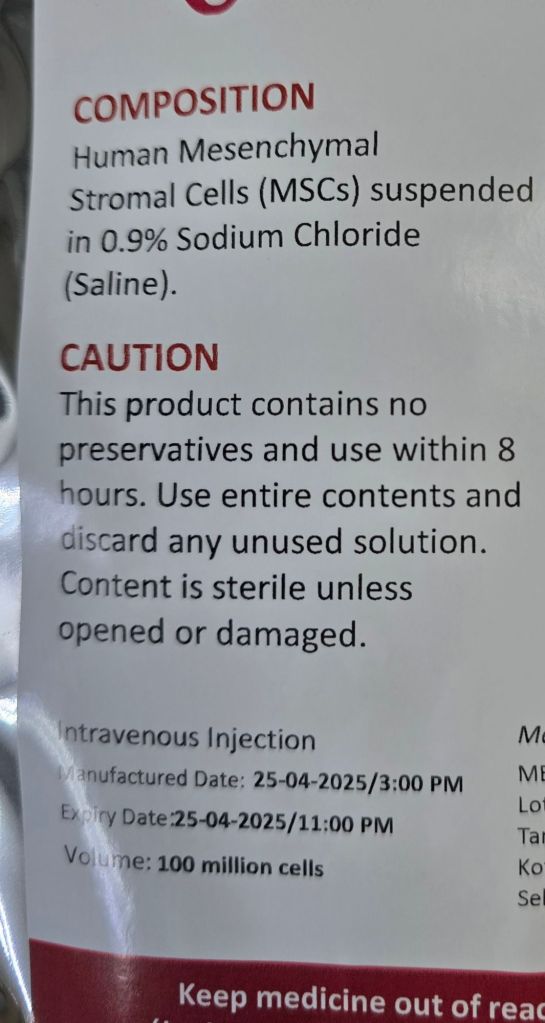
When they appear in the same young woman, the risks of type 2 diabetes, fatty-liver disease and heart trouble rise sharply. In April 2025 a 32-year-old patient at our clinic chose an emerging option—an intravenous infusion of 100 million umbilical-cord mesenchymal stem cells (MSCs)—to support her lifestyle changes and routine medical care.
This article explains why MSCs were considered, how they might work and what else is needed for success.
1 | Quick facts about PCOS, visceral fat and insulin resistance
- PCOS is a hormone disorder that can stop ovulation, raise male-type hormones and trigger acne, hair growth or hair loss.
- Visceral fat is the hidden fat wrapped around the intestines and liver. It releases inflammatory chemicals that make the body less sensitive to insulin.
- Insulin resistance means the body needs more insulin to keep sugars normal. Over time blood sugar creeps up and the pancreas gets tired.
Inflammation is the common thread linking all three problems.
2 | Our patient’s starting numbers
Age: 32 years
Body-mass index (BMI): 27.8 kg/m² (over-weight)
Waist-to-hip ratio: 0.99 (central obesity; healthy target for women < 0.85)
Visceral-fat score (bio-impedance): 14 (device “normal” 1 – 9)
Body-fat percentage: 41.5 %
Key blood results
LH 8.54 mIU/mL and FSH 3.65 mIU/mL → LH : FSH ≈ 2.3 : 1 (typical of polycystic-ovary syndrome, PCOS)
HOMA-IR 2.3 (upper end of “normal” → early insulin resistance)
hs-CRP 4 mg/L (low-grade, body-wide inflammation)
Triglycerides 1.59 mmol/L and HDL-C 1.15 mmol/L (unfavourable lipid pattern)
25-hydroxy-vitamin D 20.8 ng/mL (insufficient)
3 | What are MSCs—and why umbilical-cord cells?
Mesenchymal stem cells are “medicinal signalling cells.” They do not turn into babies; instead they release helpful proteins and tiny parcels called exosomes that:
- calm inflammation,
- encourage tissue repair,
- improve how the body handles glucose and fats.
Umbilical-cord MSCs are easy to collect (no harm to mother or baby), are young and very active, and can be used in matched or unmatched recipients.
4 | How MSCs may help in this case
4.1 Calming the inflammatory “fire”
In a 2021 study, bone-marrow MSCs lowered TNF-α, raised IL-10 and restored fertility and better glucose control in a PCOS mouse model.
4.2 Sharpening insulin action
A Phase II human trial (2022) gave three weekly IV doses of umbilical-cord MSCs to adults with type 2 diabetes. Fasting sugar and HbA1c dropped and no major side-effects were seen.
4.3 Shrinking deep-belly fat
Animal work shows that adipose-derived MSCs reduce visceral and liver fat, improve glucose tolerance and switch fat genes from “storage” to “burn” mode.
4.4 Broad metabolic benefits
A 2023 review sums up MSC effects: less inflammation, better insulin sensitivity, healthier lipids and organ protection across the full metabolic-syndrome picture.
Important: Research is still growing. MSC therapy supports—never replaces—healthy eating, exercise and regular doctor visits.
5 | Treatment day and safety steps
- Dose: 100 million umbilical-cord MSCs in 100 mL saline over 40 minutes.
- Monitored vital signs, blood pressure and oxygen saturation during and 2 hours after infusion.
- No immediate adverse effects.
- The product was processed in a licensed cell-processing facility following Malaysian guidelines for minimally-manipulated cell therapy.
6 | Her integrated care plan
- Nutrition – cut ~500 kcal/day; focus on vegetables, whole grains, lean protein; limit sweet drinks and fried foods.
- Exercise – ≥ 150 min brisk walking or jogging weekly plus 3 strength sessions (squats, push-ups, resistance bands).
- Vitamin D – 2 000 IU/day to correct low level.
- Sleep & stress – aim for 7 hours sleep; add mindfulness or yoga 10 min/day.
- Medication watch – metformin ready if glucose tolerance test rises.
- Monitoring every 3–6 months – waist size, weight, fasting glucose/insulin, full lipid panel, hs-CRP and menstrual-cycle diary.
7 | Expected timeline
- 1–3 months: lower CRP, lighter bloating, better energy.
- 3–6 months: improved insulin score, slight drop in waistline, possible return of regular periods.
- 6–12 months: deeper reduction in visceral fat, better lipid numbers and sustained cycle control—IF lifestyle steps stay on track.
8 | Questions patients often ask
Is one infusion enough?
Most research uses one to three doses. We will re-evaluate labs and symptoms before deciding on another infusion.
Will I definitely lose weight?
Stem cells lower inflammation and insulin resistance, making weight-loss efforts more effective—but diet and exercise still do most of the fat-burning work.
Is it safe?
Published trials report mild, short-lived side-effects (flushing, low-grade fever). Severe reactions are rare when cells are prepared in a licensed lab. Long-term data are still collecting.
9 | Key references
- Chugh RM et al. Mesenchymal stem cell therapy ameliorates metabolic dysfunction and restores fertility in a PCOS mouse model through interleukin-10. Stem Cell Res Ther 2021.
- Zang L et al. Efficacy and safety of umbilical cord-derived mesenchymal stem cells in adults with type 2 diabetes. Stem Cells Transl Med 2023;12:775-782.
- Cao M et al. Adipose-derived mesenchymal stem cells improve glucose homeostasis in diet-induced-obese mice. Sci Rep 2021.
- Huang X et al. Mesenchymal stem/stromal cells therapy for metabolic syndrome: potential clinical application? Stem Cells 2023;41:893-906.
(All articles are open-access and can be found on PubMed or journal websites.)
10 | Take-home message
For this 32-year-old, PCOS, visceral fat and early insulin resistance formed a three-pronged threat. A single infusion of 100 million MSCs offers a science-backed way to cool inflammation, sharpen insulin action and support ovarian health.
When paired with solid lifestyle habits and regular follow-up, cell therapy may speed her journey back to metabolic balance.
Disclaimer: This article is for education only and does not replace personal medical advice. Cell-based therapies should be done in licensed centres under qualified doctors and national regulations.
 Dr Teoh - Family Medicine Specialist, Stem Cell & Immune Therapy